Is there still a solar tax credit for Clinchport homeowners in 2026?
The 30% federal credit is gone for 2026 installations. What survives for Clinchport: Virginia's own incentives and tax treatment - verified against state sources.
The 30% federal solar tax credit ended for installations finished after December 31, 2025 - Clinchport systems completed in 2026 get $0 from it.
Installed home solar for Clinchport homeowners averages about $2.58 a watt across the U.S. marketplace - roughly $30,960 for a 12 kW system before incentives.
Clinchport, Virginia has about 62 residents, and its solar quotes are built from system size, roof complexity and export rules - not the town name.
Leased and PPA systems deserve extra scrutiny in 2026: the sales pitch often bundles 'tax savings' that now accrue to the leasing company under separate commercial rules - not to you. Get every claimed saving in writing, attributed to a specific law, before signing a 20-25 year contract.
The federal Residential Clean Energy Credit - the 30% one every solar ad still quotes - was repealed by the One Big Beautiful Bill Act signed July 4, 2025. Per the IRS, it is not available for any system placed in service after December 31, 2025, and 'placed in service' means the installation completion date, not the contract date.
The 2026 numbers
| System size | Installed price (marketplace avg) | Notes |
|---|---|---|
| 6 kW | $15,480 | Small roof / low usage |
| 8 kW | $20,640 | Typical starter system |
| 10 kW | $25,800 | Family home with AC |
| 12 kW | $30,960 | Large home / EV charging |
| Home battery (optional) | $12,000-$16,000 | Backup power + self-consumption |
Get solar quotes for Clinchport
These platforms collect bids from licensed installers so you can compare against the same spec. Prices come from installers, not from this site.
Disclosure: this is an independent guide. If you request quotes through a link here, the platform may pay this site a referral fee. That fee never changes your quotes.
The 30% federal tax credit is gone for 2026 installations
The federal Residential Clean Energy Credit (30%) was repealed by the One Big Beautiful Bill Act signed July 4, 2025. Per the IRS, the credit is not available for any property placed in service after December 31, 2025 - and the IRS counts the installation completion date, not the contract date.
Virginia rules that decide your payback
| Rule | Virginia status |
|---|---|
| Export compensation (net metering) | Net energy metering with kilowatt-hour credits: "Any billing period credits shall be accumulated, carried forward, and applied at the first opportunity to any billing periods having positive net consumptions," with residential systems capped at 25 kW for investor-owned utilities and 20 kW for electric cooperatives, and the program remaining open until net-metered capacity reaches six percent of each utility's adjusted Virginia peak-load forecast (five percent general, one percent reserved for low-income customers). |
| State incentive | Virginia's SREC market, created by the Virginia Clean Economy Act RPS — Va. Code § 56-585.5 requires a Phase II Utility (Dominion) to meet "4.5 percent for the 2026 through 2030 compliance years" of its RPS obligation with solar, wind or anaerobic digestion resources of one megawatt or less located in the Commonwealth, and "65 percent of such generation capacity procured shall be from the purchase of energy, capacity, and environmental attributes from solar facilities owned by persons other than a utility" — which is what creates demand for rooftop SRECs. There is no statewide rebate; the other state-level benefit is the local-option property tax exemption under Va. Code § 58.1-3661. |
| Sales tax on the system | Not exempt - taxed like any purchase |
| Property tax on added home value | Excluded |
Virginia has a real solar-rights law: under Va. Code § 55.1-1820.1, "No association shall prohibit an owner from installing a solar energy collection device on that owner's property unless the recorded declaration for the association establishes such a prohibition," and an HOA restriction is deemed unreasonable if it "increases the cost of installation ... by five percent" or "reduces the energy production ... by 10 percent." Offsetting that, Dominion residential customers whose systems exceed 20 kW AC pay a monthly standby charge, and unused kWh credits left at the end of the 12-month net metering period are forfeited unless the customer has a power purchase agreement to sell the excess.
This guide is research, not advice: an independent summary of published prices and state rules. It is not an installer, lender or tax advisor - verify incentive eligibility with a licensed tax professional before relying on it.
What this means for Clinchport roofs
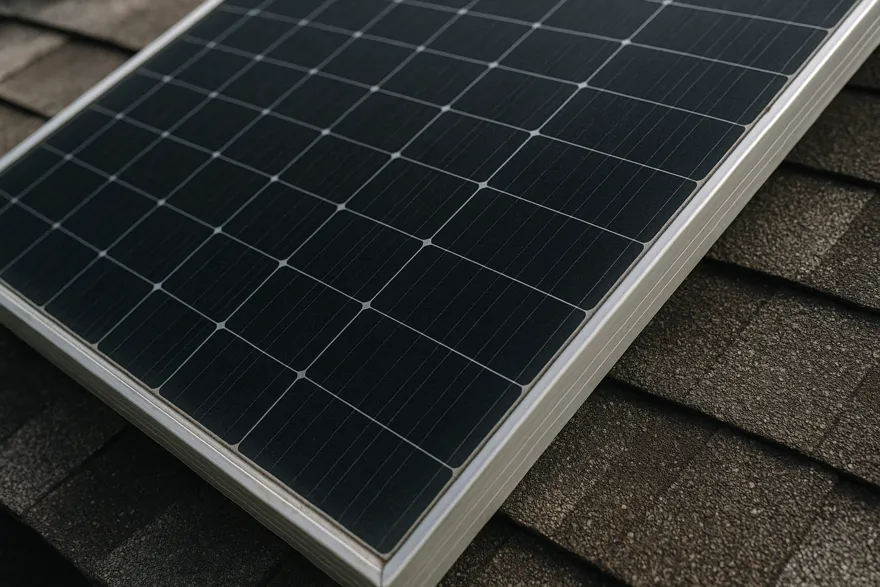
The honest 2026 answer for Clinchport: solar pays back slower without the 30% credit - paybacks that ran 7-10 years often now run 10-14 - but electricity rates keep rising and hardware is the cheapest it has ever been. The deciding factor is Virginia's export compensation, covered in the net metering section.
This guide is research, not advice: an independent summary of published prices and state rules. It is not an installer, lender or tax advisor - verify incentive eligibility with a licensed tax professional before relying on it.
Getting Clinchport quotes
Marketplace platforms collect bids from multiple VA installers against the same spec, which is the only clean way to compare - same roof, same size, different prices. Getting quotes is free and does not commit you to anything; prices come from the installers, never from this site.
This guide is research, not advice: an independent summary of published prices and state rules. It is not an installer, lender or tax advisor - verify incentive eligibility with a licensed tax professional before relying on it.
Common questions
Do I need a battery with my solar?
Not necessarily. Under full retail net metering, the grid effectively stores your surplus for free. Batteries earn their $12,000-16,000 price where export rates are low, outages are common, or time-of-use rates make evening self-consumption valuable.
Is my roof even suitable for solar?
Three things decide it: orientation (south-facing is best in the U.S., east-west workable), shade (trees or taller buildings across midday hours can sink the math), and roof age (if the shingles have under 10 years left, reroof first - removing and reinstalling panels later costs thousands). Any honest installer assesses all three before quoting a number.
Is there still a federal solar tax credit in 2026?
No. The 30% Residential Clean Energy Credit was repealed effective for systems placed in service after December 31, 2025, per the IRS. Only systems finished by the end of 2025 qualified. State-level incentives are separate and some survive - check the state page in this guide.
Is solar still worth it without the federal credit?
It depends mostly on your state's export rules and your daytime usage. Paybacks lengthened by roughly a third when the credit ended, but rising electricity rates and record-cheap hardware keep the math workable in states with decent export compensation - and marginal where exports pay avoided cost only.
How much does home solar cost in 2026?
The U.S. marketplace average is about $2.58 per watt installed - roughly $15,500 for a 6 kW system and $31,000 for 12 kW, before any state incentives. Quotes meaningfully above that level deserve a written explanation of what justifies the premium.
Get solar quotes for Clinchport
These platforms collect bids from licensed installers so you can compare against the same spec. Prices come from installers, not from this site.
Disclosure: this is an independent guide. If you request quotes through a link here, the platform may pay this site a referral fee. That fee never changes your quotes.
Prices in nearby cities
Clintwood · Coeburn · Colonial Beach · Colonial Heights · Courtland · Covington · Craigsville · Crewe · Culpeper · Damascus · Danville · Dayton