What Arkansas still offers after the federal credit ended
Every incentive on this page is verified against Arkansas government sources - and the expired ones salespeople still quote are called out.
The 30% federal solar tax credit ended for installations finished after December 31, 2025 - Cushman systems completed in 2026 get $0 from it.
Under Arkansas's export rules, compensation for surplus power decides the payback - which typically runs 10-14 years on unsubsidized 2026 math.
Installed home solar for Cushman homeowners averages about $2.58 a watt across the U.S. marketplace - roughly $30,960 for a 12 kW system before incentives.
Leased and PPA systems deserve extra scrutiny in 2026: the sales pitch often bundles 'tax savings' that now accrue to the leasing company under separate commercial rules - not to you. Get every claimed saving in writing, attributed to a specific law, before signing a 20-25 year contract.
The federal Residential Clean Energy Credit - the 30% one every solar ad still quotes - was repealed by the One Big Beautiful Bill Act signed July 4, 2025. Per the IRS, it is not available for any system placed in service after December 31, 2025, and 'placed in service' means the installation completion date, not the contract date.
The 2026 numbers
| System size | Installed price (marketplace avg) | Notes |
|---|---|---|
| 6 kW | $15,480 | Small roof / low usage |
| 8 kW | $20,640 | Typical starter system |
| 10 kW | $25,800 | Family home with AC |
| 12 kW | $30,960 | Large home / EV charging |
| Home battery (optional) | $12,000-$16,000 | Backup power + self-consumption |
Get solar quotes for Cushman
These platforms collect bids from licensed installers so you can compare against the same spec. Prices come from installers, not from this site.
Disclosure: this is an independent guide. If you request quotes through a link here, the platform may pay this site a referral fee. That fee never changes your quotes.
Arkansas rules that decide your payback
| Rule | Arkansas status |
|---|---|
| Export compensation (net metering) | Arkansas has split its customers in two: 'legacy' customers who got a Standard Interconnection Agreement in before September 30, 2024 keep the old retail-rate net metering structure (the rate structure, terms and conditions in effect before December 31, 2022) until June 1, 2040, while new 'non-legacy' customers fall under the Cost-Shifting Prevention Act of 2023 framework, where exports are credited at the utility's avoided cost tied to the prior calendar year's average Locational Marginal Price in MISO or SPP. |
| State incentive | No state-level incentive; utility rebates may apply |
| Sales tax on the system | Not exempt - taxed like any purchase |
| Property tax on added home value | No exclusion on record |
Legacy status attaches to the net-metering facility ON THE PREMISES, not to the person - so if you buy a house that already has qualifying solar, the legacy status and its June 1, 2040 end date transfer with the home, and routine maintenance or replacing parts with newer technology after September 30, 2024 does not break it. But you cannot move the system to a new address and keep legacy status. Arkansas's net metering rules were the subject of a long-running PSC docket (16-027-R) and repeated legislative rewrites (Act 464 of 2019, then Act 278 of 2023), so compensation depends heavily on your interconnection date.
This guide is research, not advice: an independent summary of published prices and state rules. It is not an installer, lender or tax advisor - verify incentive eligibility with a licensed tax professional before relying on it.
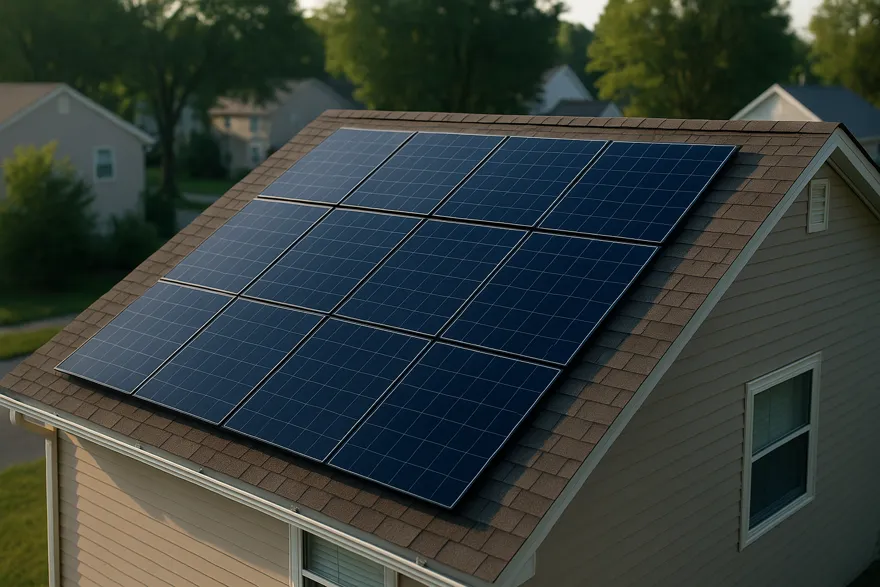
What this means for Cushman roofs
The honest 2026 answer for Cushman: solar pays back slower without the 30% credit - paybacks that ran 7-10 years often now run 10-14 - but electricity rates keep rising and hardware is the cheapest it has ever been. The deciding factor is Arkansas's export compensation, covered in the net metering section.
This guide is research, not advice: an independent summary of published prices and state rules. It is not an installer, lender or tax advisor - verify incentive eligibility with a licensed tax professional before relying on it.
Getting Cushman quotes
Same-day contracts are a red flag in this industry. Legitimate AR installers expect you to compare bids, check licenses, and read the interconnection terms. Anyone pressuring you to sign at the kitchen table is pricing in your haste.
This guide is research, not advice: an independent summary of published prices and state rules. It is not an installer, lender or tax advisor - verify incentive eligibility with a licensed tax professional before relying on it.
Common questions
Is there still a federal solar tax credit in 2026?
No. The 30% Residential Clean Energy Credit was repealed effective for systems placed in service after December 31, 2025, per the IRS. Only systems finished by the end of 2025 qualified. State-level incentives are separate and some survive - check the state page in this guide.
Is my roof even suitable for solar?
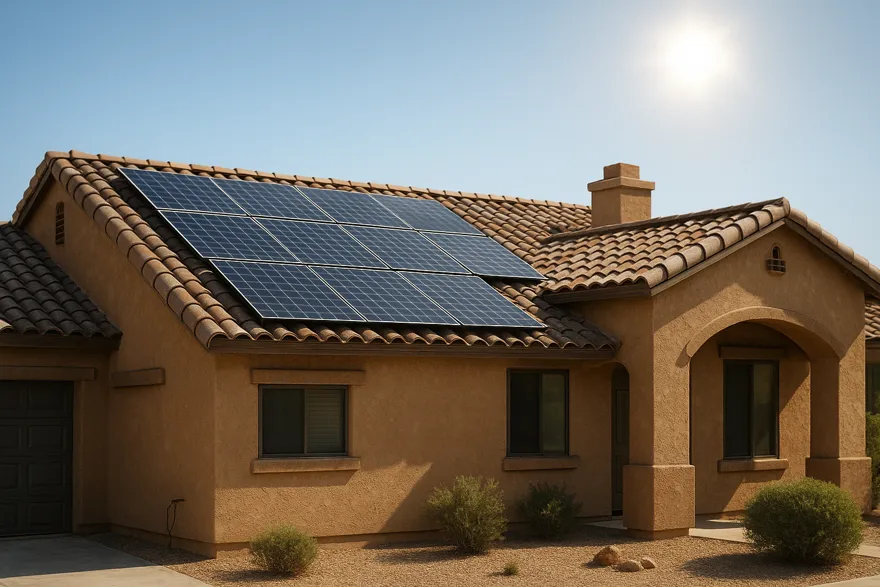
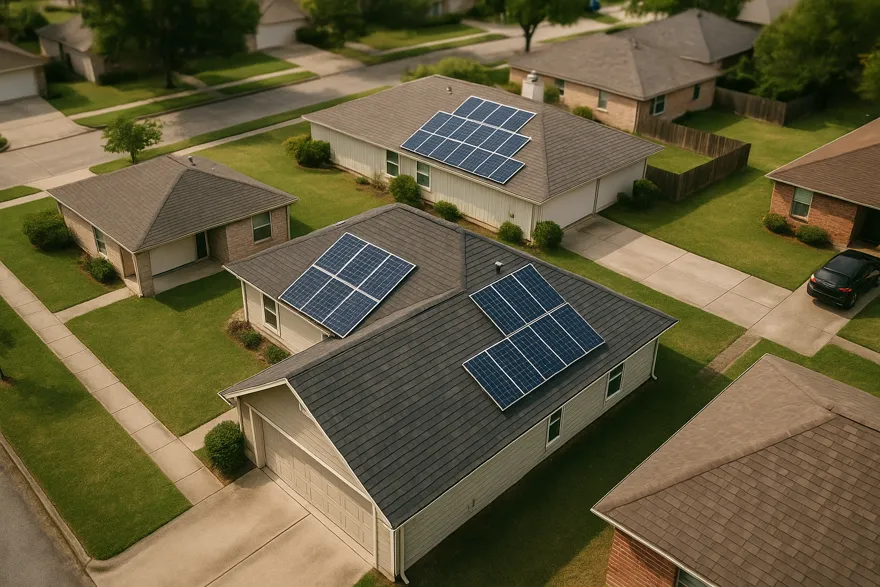
Three things decide it: orientation (south-facing is best in the U.S., east-west workable), shade (trees or taller buildings across midday hours can sink the math), and roof age (if the shingles have under 10 years left, reroof first - removing and reinstalling panels later costs thousands). Any honest installer assesses all three before quoting a number.
Should I lease, get a PPA, or buy?
Buying keeps all savings and any incentives with you. Leases and PPAs put a company's equipment on your roof for 20-25 years, complicate a home sale, and in 2026 any tax benefits they advertise belong to the company under commercial rules - not to you. Read escalator clauses carefully.
Does solar raise my property taxes?
It depends on the state - many exempt solar's added home value from property tax, others do not, and some exemptions have expiration dates. This guide's state page lists the verified rule and source for your state.
How much does home solar cost in 2026?
The U.S. marketplace average is about $2.58 per watt installed - roughly $15,500 for a 6 kW system and $31,000 for 12 kW, before any state incentives. Quotes meaningfully above that level deserve a written explanation of what justifies the premium.
Get solar quotes for Cushman
These platforms collect bids from licensed installers so you can compare against the same spec. Prices come from installers, not from this site.
Disclosure: this is an independent guide. If you request quotes through a link here, the platform may pay this site a referral fee. That fee never changes your quotes.
Prices in nearby cities
Daisy · Damascus · Danville · Dardanelle · Datto · De Queen · De Valls Bluff · DeWitt · Decatur · Delaplaine · Delight · Dell