Is there still a solar tax credit for Jacksonville Beach homeowners in 2026?
The 30% federal credit is gone for 2026 installations. What survives for Jacksonville Beach: Florida's own incentives and tax treatment - verified against state sources.
The 30% federal solar tax credit ended for installations finished after December 31, 2025 - Jacksonville Beach systems completed in 2026 get $0 from it.
Installed home solar for Jacksonville Beach homeowners averages about $2.58 a watt across the U.S. marketplace - roughly $30,960 for a 12 kW system before incentives.
Jacksonville Beach, Florida has about 23,630 residents, and its solar quotes are built from system size, roof complexity and export rules - not the town name.
The federal Residential Clean Energy Credit - the 30% one every solar ad still quotes - was repealed by the One Big Beautiful Bill Act signed July 4, 2025. Per the IRS, it is not available for any system placed in service after December 31, 2025, and 'placed in service' means the installation completion date, not the contract date.
If a salesperson in Jacksonville Beach tells you a 30% federal tax credit applies to your 2026 installation, they are quoting a dead law. What may still exist: Florida's own incentives and tax treatment, listed below, and lease/PPA arrangements where a company claims commercial credits - in which case the credit belongs to them, not you.
The 2026 numbers
| System size | Installed price (marketplace avg) | Notes |
|---|---|---|
| 6 kW | $15,480 | Small roof / low usage |
| 8 kW | $20,640 | Typical starter system |
| 10 kW | $25,800 | Family home with AC |
| 12 kW | $30,960 | Large home / EV charging |
| Home battery (optional) | $12,000-$16,000 | Backup power + self-consumption |
Get solar quotes for Jacksonville Beach
These platforms collect bids from licensed installers so you can compare against the same spec. Prices come from installers, not from this site.
Disclosure: this is an independent guide. If you request quotes through a link here, the platform may pay this site a referral fee. That fee never changes your quotes.
The 30% federal tax credit is gone for 2026 installations
The federal Residential Clean Energy Credit (30%) was repealed by the One Big Beautiful Bill Act signed July 4, 2025. Per the IRS, the credit is not available for any property placed in service after December 31, 2025 - and the IRS counts the installation completion date, not the contract date.
Florida rules that decide your payback
| Rule | Florida status |
|---|---|
| Export compensation (net metering) | Full retail net metering is still in force for Florida's investor-owned utilities under FPSC Rule 25-6.065, F.A.C. (effective April 7, 2008 and never amended): excess kWh delivered in a billing cycle are credited against the next month's consumption and roll forward for up to twelve months, after which any unused credits are paid out annually at the utility's COG-1 as-available (avoided-cost) energy rate. |
| State incentive | No state-level incentive; utility rebates may apply |
| Sales tax on the system | Exempt |
| Property tax on added home value | Excluded |
Florida Statute 163.04 voids any deed restriction or HOA covenant that prohibits solar collectors (an HOA may only dictate placement within 45 degrees east or west of due south, and only if that does not impair the collectors' effective operation), and the prevailing party in litigation recovers attorney's fees; a 2022 bill (CS/CS/HB 741, "Net Metering") that would have phased down net metering credits was vetoed by the Governor, which is why full retail net metering survives.
This guide is research, not advice: an independent summary of published prices and state rules. It is not an installer, lender or tax advisor - verify incentive eligibility with a licensed tax professional before relying on it.
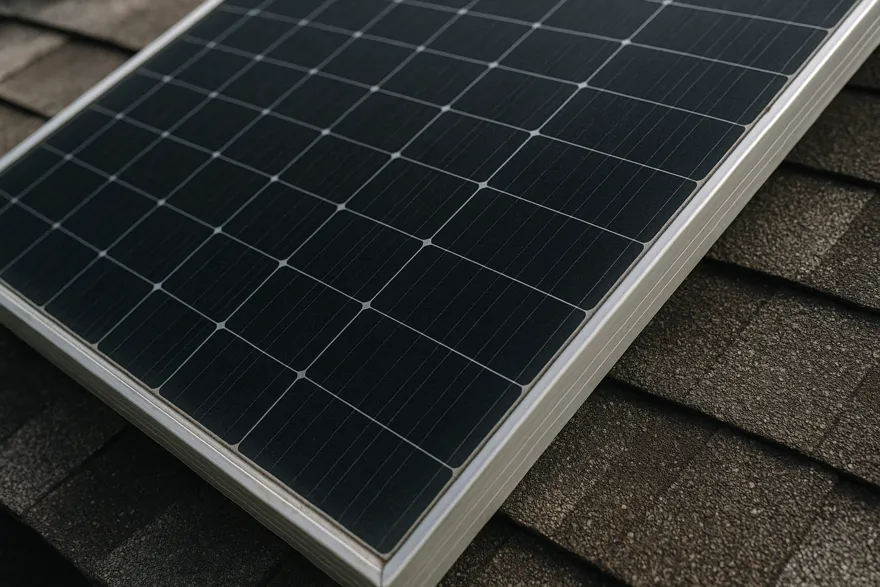
What this means for Jacksonville Beach roofs
Beware of any 2026 payback estimate that looks as good as the 2025 ones: with the federal credit gone, a third of the old subsidy math vanished. If a sales projection has not gotten noticeably worse since 2025, it is hiding something - usually an inflated utility-rate escalation assumption.
This guide is research, not advice: an independent summary of published prices and state rules. It is not an installer, lender or tax advisor - verify incentive eligibility with a licensed tax professional before relying on it.
Getting Jacksonville Beach quotes
Same-day contracts are a red flag in this industry. Legitimate FL installers expect you to compare bids, check licenses, and read the interconnection terms. Anyone pressuring you to sign at the kitchen table is pricing in your haste.
This guide is research, not advice: an independent summary of published prices and state rules. It is not an installer, lender or tax advisor - verify incentive eligibility with a licensed tax professional before relying on it.
Common questions
Is there still a federal solar tax credit in 2026?
No. The 30% Residential Clean Energy Credit was repealed effective for systems placed in service after December 31, 2025, per the IRS. Only systems finished by the end of 2025 qualified. State-level incentives are separate and some survive - check the state page in this guide.
What is net metering and why does it decide everything?
It is the rule for how your utility credits electricity you export. Full retail net metering credits exports at the same rate you pay - the grid works like a free battery. Net billing or avoided-cost rules pay far less per exported kWh, which lengthens payback and strengthens the case for a home battery.
How do I check if a solar quote is fair?
Divide the total price by the system's wattage. The U.S. marketplace average is about $2.58 per watt installed; $2.30-3.00 covers most fair quotes depending on roof complexity. Above that, ask exactly what you are paying extra for - in writing.
Should I lease, get a PPA, or buy?
Buying keeps all savings and any incentives with you. Leases and PPAs put a company's equipment on your roof for 20-25 years, complicate a home sale, and in 2026 any tax benefits they advertise belong to the company under commercial rules - not to you. Read escalator clauses carefully.
Is solar still worth it without the federal credit?
It depends mostly on your state's export rules and your daytime usage. Paybacks lengthened by roughly a third when the credit ended, but rising electricity rates and record-cheap hardware keep the math workable in states with decent export compensation - and marginal where exports pay avoided cost only.
Get solar quotes for Jacksonville Beach
These platforms collect bids from licensed installers so you can compare against the same spec. Prices come from installers, not from this site.
Disclosure: this is an independent guide. If you request quotes through a link here, the platform may pay this site a referral fee. That fee never changes your quotes.