What home solar costs in New Baltimore - and the 2026 rules that changed the math
Think of this as the pre-quote homework for New Baltimore, PA: 2026 prices by system size, the federal credit's expiration and what it means, Pennsylvania net metering in plain words, and the sales tactics to walk away from.
Installed home solar for New Baltimore homeowners averages about $2.58 a watt across the U.S. marketplace - roughly $30,960 for a 12 kW system before incentives.
The 30% federal solar tax credit ended for installations finished after December 31, 2025 - New Baltimore systems completed in 2026 get $0 from it.
Under Pennsylvania's export rules, compensation for surplus power decides the payback - which typically runs 10-14 years on unsubsidized 2026 math.
New Baltimore plus 12 surrounding towns within 40 km form one installer market of about 50,949 people - quotes should not vary much by town.
Door-to-door solar sales in New Baltimore run on urgency and outdated math. The two facts that defuse most pitches: the U.S. marketplace average is about $2.58 a watt installed, and the federal credit expired for systems finished after December 31, 2025. Any quote built on either being different needs proof.
With 12 towns within 40 km, New Baltimore sits in a shared installer market of about 50,949 people - the same crews quote the whole area, so prices should not differ much from one town to the next. Big differences between quotes reflect sales margin, not your roof.
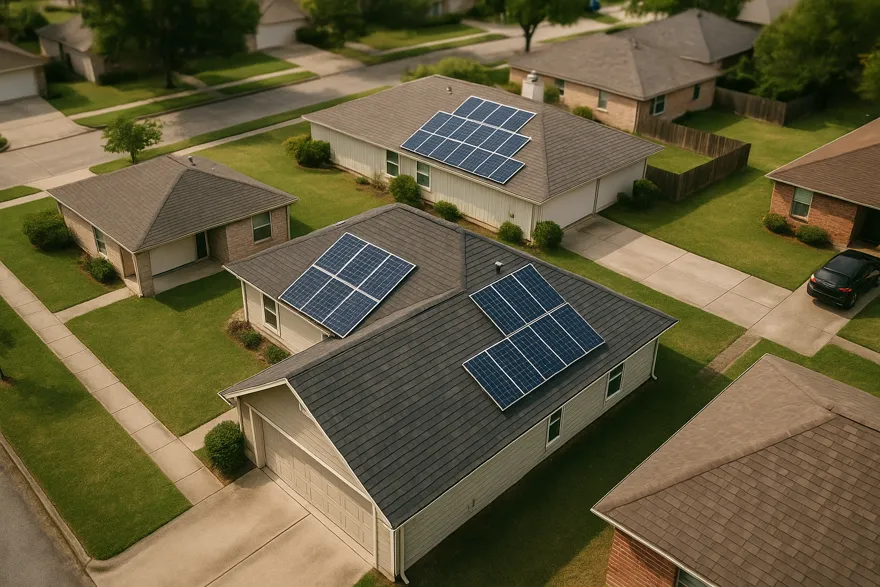
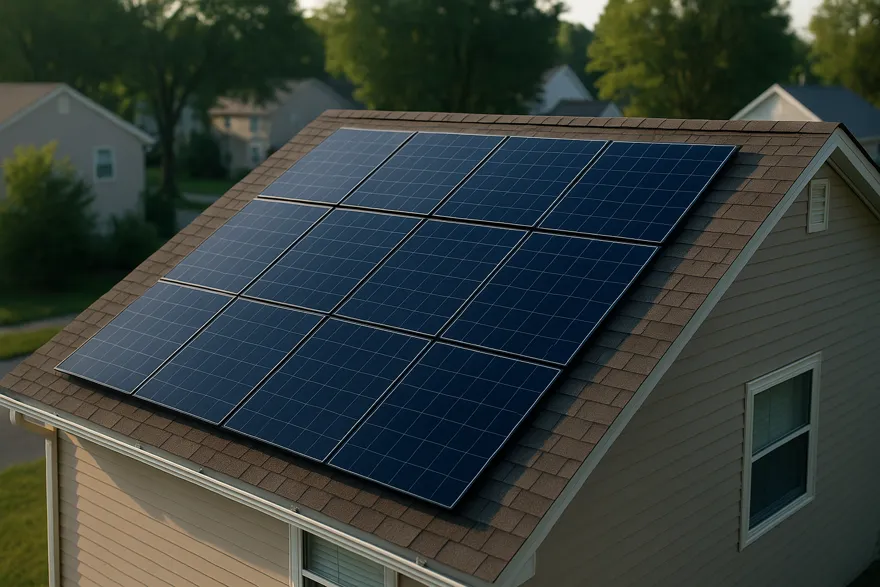
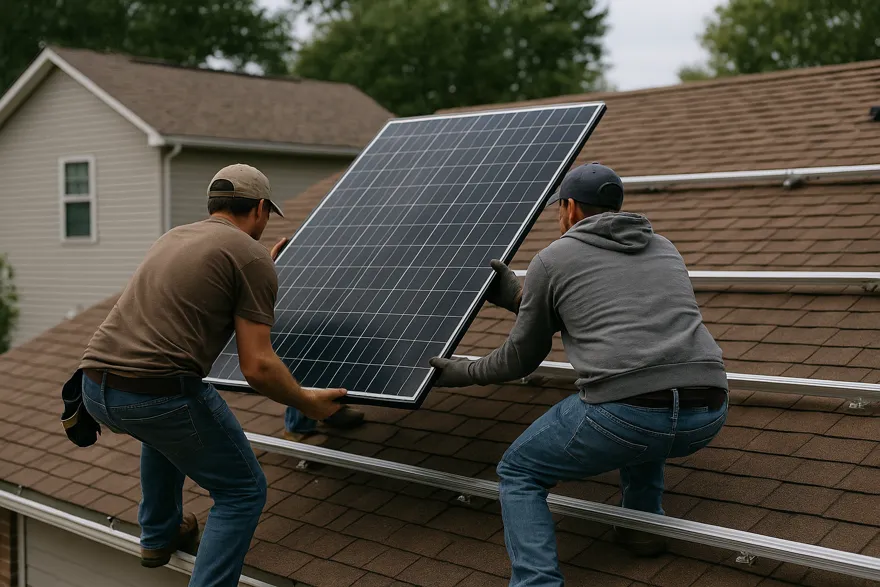
What installed solar costs in 2026
| System size | Installed price (marketplace avg) | Notes |
|---|---|---|
| 6 kW | $15,480 | Small roof / low usage |
| 8 kW | $20,640 | Typical starter system |
| 10 kW | $25,800 | Family home with AC |
| 12 kW | $30,960 | Large home / EV charging |
| Home battery (optional) | $12,000-$16,000 | Backup power + self-consumption |
Compare solar quotes for New Baltimore
These platforms collect bids from licensed installers so you can compare against the same spec. Prices come from installers, not from this site.
Disclosure: this is an independent guide. If you request quotes through a link here, the platform may pay this site a referral fee. That fee never changes your quotes.
The 30% federal tax credit is gone for 2026 installations
The federal Residential Clean Energy Credit (30%) was repealed by the One Big Beautiful Bill Act signed July 4, 2025. Per the IRS, the credit is not available for any property placed in service after December 31, 2025 - and the IRS counts the installation completion date, not the contract date.
Pennsylvania rules that decide your payback
| Rule | Pennsylvania status |
|---|---|
| Export compensation (net metering) | Full retail net metering: electric distribution companies must credit customer-generators "at the full retail kilowatt-hour rate, which shall include generation, transmission and distribution charges," for residential systems up to 50 kW, with excess kWh accumulating until year-end when the default service provider cashes them out at its price-to-compare rate (52 Pa. Code § 75.13). |
| State incentive | Pennsylvania SREC market under the Alternative Energy Portfolio Standards Act (Act 213 of 2004) — a net-metered customer-generator owns the alternative energy credits its system produces and may sell SRECs; Act 40 of 2017 restricted eligibility to systems delivering power inside Pennsylvania. There is no statewide solar rebate or state tax credit, and PA Solar for All is not operational. |
| Sales tax on the system | Not exempt - taxed like any purchase |
| Property tax on added home value | No exclusion on record |
Pennsylvania's $156 million federally funded Solar for All program has never launched — DEP's own page states "The Pennsylvania Solar for All program is not operational at this time" and warns homeowners to disregard any solar installer claiming to be an active Solar for All partner. Treat any such sales pitch as a red flag.
This guide is research, not advice: an independent summary of published prices and state rules. It is not an installer, lender or tax advisor - verify incentive eligibility with a licensed tax professional before relying on it.
Why only these platforms
A quote that beats everyone by 30% is not a bargain - it is a company pricing for survival, and in the 2026 shakeout that bet usually loses. Fair pricing sits near $2.58 a watt; what separates good money from wasted money is who is left standing to honor the warranty.
Solar lead generation is where most industry abuse lives, so this guide only links platforms that show you multiple named installers and let you walk away - never single-installer funnels or phone-blast forms. If a platform falls below that bar it gets removed from every page on this site.
| Platform | What you get | Background |
|---|---|---|
| EnergySage | Side-by-side bids from multiple installers | The largest U.S. solar marketplace; publishes its pricing data publicly |
| Modernize | Matched with vetted local installers | Established home-services network (QuinStreet); installers are screened |
Getting quotes in New Baltimore
Before requesting quotes, have your last 12 months of electricity bills handy - system sizing should follow your real usage, not a salesperson's template. A bid sized far above your usage is a margin play, especially now that surplus export pays less in most states.
- Your last 12 months of electricity bills - sizing should follow real usage
- Roof age and type - reroofing after panels go up is expensive
- Your utility's export rate under Pennsylvania rules - it decides the payback
- Whether you want backup power - that is a battery decision, priced separately
- Written itemization: hardware, labor, permits, and any financing dealer fee
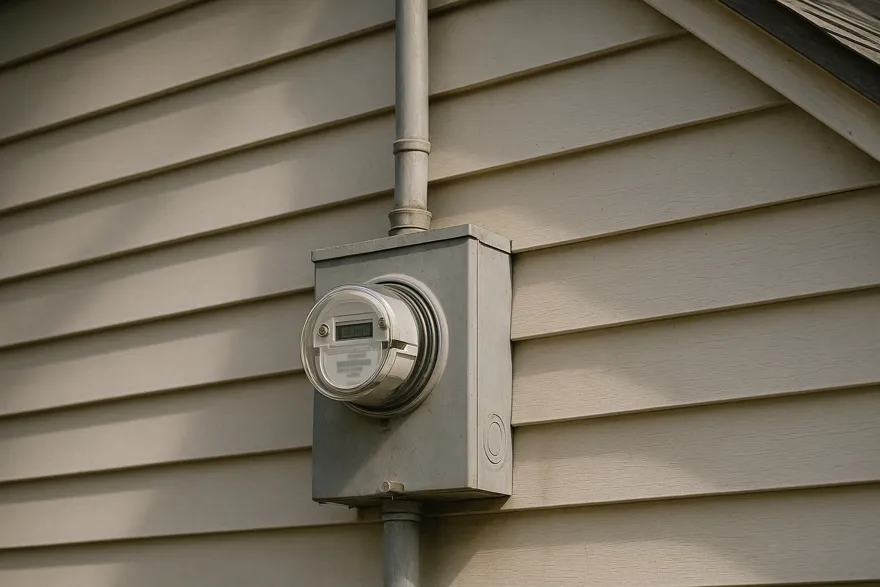
Reading a New Baltimore roof honestly
Same-day contracts are a red flag in this industry. Legitimate PA installers expect you to compare bids, check licenses, and read the interconnection terms. Anyone pressuring you to sign at the kitchen table is pricing in your haste.
This guide is research, not advice: an independent summary of published prices and state rules. It is not an installer, lender or tax advisor - verify incentive eligibility with a licensed tax professional before relying on it.
Common questions
Is solar still worth it without the federal credit?
It depends mostly on your state's export rules and your daytime usage. Paybacks lengthened by roughly a third when the credit ended, but rising electricity rates and record-cheap hardware keep the math workable in states with decent export compensation - and marginal where exports pay avoided cost only.
What happens if my installer goes out of business?
Panel and inverter warranties come from the manufacturers and survive, but the workmanship warranty usually dies with the company. That is a real risk in the post-credit shakeout - prefer installers with years of local history, and get manufacturer-backed workmanship coverage where offered.
Is my roof even suitable for solar?
Three things decide it: orientation (south-facing is best in the U.S., east-west workable), shade (trees or taller buildings across midday hours can sink the math), and roof age (if the shingles have under 10 years left, reroof first - removing and reinstalling panels later costs thousands). Any honest installer assesses all three before quoting a number.
Should I lease, get a PPA, or buy?
Buying keeps all savings and any incentives with you. Leases and PPAs put a company's equipment on your roof for 20-25 years, complicate a home sale, and in 2026 any tax benefits they advertise belong to the company under commercial rules - not to you. Read escalator clauses carefully.
How much does home solar cost in 2026?
The U.S. marketplace average is about $2.58 per watt installed - roughly $15,500 for a 6 kW system and $31,000 for 12 kW, before any state incentives. Quotes meaningfully above that level deserve a written explanation of what justifies the premium.
Is there still a federal solar tax credit in 2026?
No. The 30% Residential Clean Energy Credit was repealed effective for systems placed in service after December 31, 2025, per the IRS. Only systems finished by the end of 2025 qualified. State-level incentives are separate and some survive - check the state page in this guide.
Compare solar quotes for New Baltimore
These platforms collect bids from licensed installers so you can compare against the same spec. Prices come from installers, not from this site.
Disclosure: this is an independent guide. If you request quotes through a link here, the platform may pay this site a referral fee. That fee never changes your quotes.
Prices in nearby cities
New Beaver · New Berlin · New Bethlehem · New Brighton · New Britain · New Buffalo · New Castle · New Centerville · New Columbus · New Cumberland · New Eagle · New Florence