What Arizona pays for your exported solar power
Export compensation is the single biggest payback lever in 2026. Here is Arizona's current rule in plain words, with the official source.
Under Arizona's export rules, compensation for surplus power decides the payback - which typically runs 10-14 years on unsubsidized 2026 math.
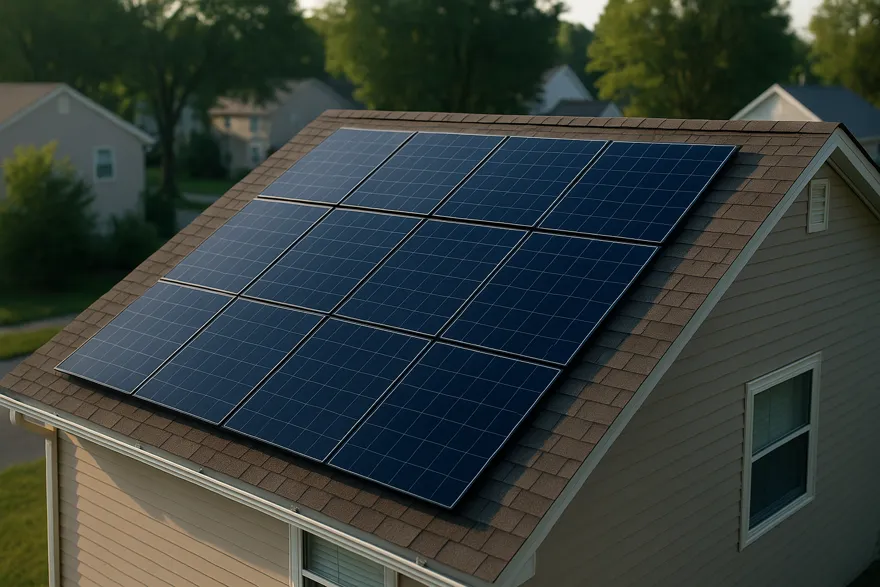
Installed home solar for Phoenix homeowners averages about $2.58 a watt across the U.S. marketplace - roughly $30,960 for a 12 kW system before incentives.
Phoenix, Arizona has about 1,673,164 residents, and its solar quotes are built from system size, roof complexity and export rules - not the town name.
Beware of any 2026 payback estimate that looks as good as the 2025 ones: with the federal credit gone, a third of the old subsidy math vanished. If a sales projection has not gotten noticeably worse since 2025, it is hiding something - usually an inflated utility-rate escalation assumption.
Whether solar still pays in Arizona after the federal credit's end comes down to arithmetic, not ideology: installed cost (about $2.58 a watt at the marketplace average), what your utility pays for exports, and how much of your generation you use yourself. High self-consumption - daytime usage, EV charging, batteries - is now the biggest lever.
The 2026 numbers
| System size | Installed price (marketplace avg) | Notes |
|---|---|---|
| 6 kW | $15,480 | Small roof / low usage |
| 8 kW | $20,640 | Typical starter system |
| 10 kW | $25,800 | Family home with AC |
| 12 kW | $30,960 | Large home / EV charging |
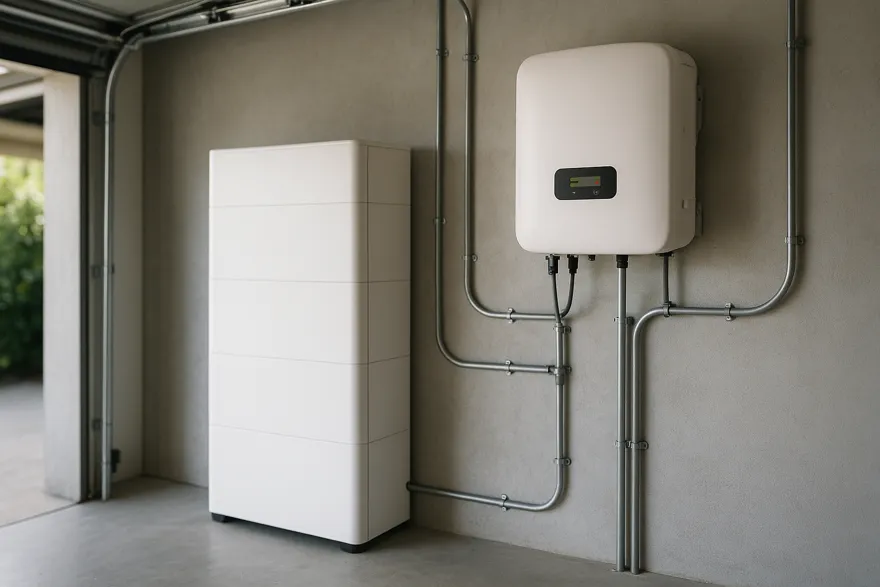
| Home battery (optional) | $12,000-$16,000 | Backup power + self-consumption |
Get solar quotes for Phoenix
These platforms collect bids from licensed installers so you can compare against the same spec. Prices come from installers, not from this site.
Disclosure: this is an independent guide. If you request quotes through a link here, the platform may pay this site a referral fee. That fee never changes your quotes.
Arizona rules that decide your payback
| Rule | Arizona status |
|---|---|
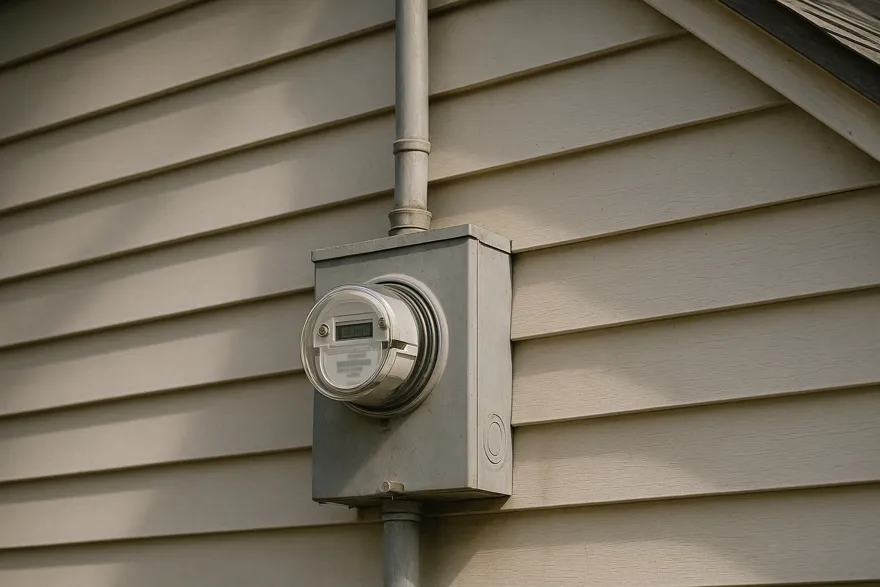
| Export compensation (net metering) | Traditional retail net metering is CLOSED to new customers; exported energy is bought back under an avoided-cost export rate (Resource Comparison Proxy, RCP), set annually by the Arizona Corporation Commission, well below the retail rate. The rate in effect when a customer requests interconnection is locked in for 10 years, and the RCP may not fall more than 10% per year. Customers interconnected before the 2018 cutover were grandfathered on net metering for 20 years. |
| State incentive | Credit for Solar Energy Devices (Arizona Form 310, A.R.S. 43-1083) - a nonrefundable state income tax credit equal to 25% of the device cost, capped at $1,000, with unused amounts carried forward up to five consecutive tax years. |
| Sales tax on the system | Exempt |
| Property tax on added home value | Excluded |
A.R.S. 33-1816 says an HOA "shall not prohibit the installation or use of a solar energy device" and may only adopt placement rules that do not impair the device's function, cost or efficiency, with attorney's fees awarded to a homeowner who prevails; separately, Arizona's $156 million "Solar for All Arizonans" low-income rooftop solar program is suspended - the Governor's Office of Resiliency received an EPA grant termination notice on August 7, 2025 and states the program "is unavailable until further notice."
This guide is research, not advice: an independent summary of published prices and state rules. It is not an installer, lender or tax advisor - verify incentive eligibility with a licensed tax professional before relying on it.
What this means for Phoenix roofs
Whether solar still pays in Arizona after the federal credit's end comes down to arithmetic, not ideology: installed cost (about $2.58 a watt at the marketplace average), what your utility pays for exports, and how much of your generation you use yourself. High self-consumption - daytime usage, EV charging, batteries - is now the biggest lever.
This guide is research, not advice: an independent summary of published prices and state rules. It is not an installer, lender or tax advisor - verify incentive eligibility with a licensed tax professional before relying on it.
Getting Phoenix quotes
Same-day contracts are a red flag in this industry. Legitimate AZ installers expect you to compare bids, check licenses, and read the interconnection terms. Anyone pressuring you to sign at the kitchen table is pricing in your haste.
This guide is research, not advice: an independent summary of published prices and state rules. It is not an installer, lender or tax advisor - verify incentive eligibility with a licensed tax professional before relying on it.
Common questions
How long do solar panels actually last?
Panels are typically warrantied for 25 years of production and commonly outlive it, losing about 0.5% output per year. Inverters are the component that usually needs replacement - typically once, around year 12-15, at a few thousand dollars.
Is solar still worth it without the federal credit?
It depends mostly on your state's export rules and your daytime usage. Paybacks lengthened by roughly a third when the credit ended, but rising electricity rates and record-cheap hardware keep the math workable in states with decent export compensation - and marginal where exports pay avoided cost only.
Does solar raise my property taxes?
It depends on the state - many exempt solar's added home value from property tax, others do not, and some exemptions have expiration dates. This guide's state page lists the verified rule and source for your state.
What is net metering and why does it decide everything?
It is the rule for how your utility credits electricity you export. Full retail net metering credits exports at the same rate you pay - the grid works like a free battery. Net billing or avoided-cost rules pay far less per exported kWh, which lengthens payback and strengthens the case for a home battery.
Should I lease, get a PPA, or buy?
Buying keeps all savings and any incentives with you. Leases and PPAs put a company's equipment on your roof for 20-25 years, complicate a home sale, and in 2026 any tax benefits they advertise belong to the company under commercial rules - not to you. Read escalator clauses carefully.
Get solar quotes for Phoenix
These platforms collect bids from licensed installers so you can compare against the same spec. Prices come from installers, not from this site.
Disclosure: this is an independent guide. If you request quotes through a link here, the platform may pay this site a referral fee. That fee never changes your quotes.
Prices in nearby cities
Pima · Pinetop-Lakeside · Prescott · Prescott Valley · Quartzsite · Queen Creek · Safford · Sahuarita · San Luis · Scottsdale · Sedona · Show Low