How Taft homeowners get played - and the checks that stop it
Door-to-door solar sales run on urgency and dead subsidies. The exact claims that should end a Taft kitchen-table pitch, and how to verify an installer.
The 30% federal solar tax credit ended for installations finished after December 31, 2025 - Taft systems completed in 2026 get $0 from it.
Installed home solar for Taft homeowners averages about $2.58 a watt across the U.S. marketplace - roughly $30,960 for a 12 kW system before incentives.
Taft, California has about 6,988 residents, and its solar quotes are built from system size, roof complexity and export rules - not the town name.
Residential solar has a documented problem with predatory sales, and the end of the federal credit made it worse - outdated subsidy claims are now the easiest way to inflate a payback slide. The checks below are how Taft homeowners separate real installers from commission machines.
The pattern behind most solar complaints is identical: an unsolicited visit, a same-day discount, a payback chart built on subsidies that no longer exist, and a financed contract whose dealer fee was never mentioned. Every element of that pattern is checkable before you sign.
The 2026 numbers
| System size | Installed price (marketplace avg) | Notes |
|---|---|---|
| 6 kW | $15,480 | Small roof / low usage |
| 8 kW | $20,640 | Typical starter system |
| 10 kW | $25,800 | Family home with AC |
| 12 kW | $30,960 | Large home / EV charging |
| Home battery (optional) | $12,000-$16,000 | Backup power + self-consumption |
Get solar quotes for Taft
These platforms collect bids from licensed installers so you can compare against the same spec. Prices come from installers, not from this site.
Disclosure: this is an independent guide. If you request quotes through a link here, the platform may pay this site a referral fee. That fee never changes your quotes.
Sales claims: what checks out - and what should end the conversation
Legitimate in 2026
- State-level incentives that this guide's state page lists with a legal source
- Net metering or net billing credits - at the exact rate filed with your state regulator
- Manufacturer warranties of 25 years on panels, separate from workmanship
- Marketplace price comparisons around $2.58 per watt installed
Walk away when you hear
- A 30% federal tax credit on a 2026 installation - repealed for systems finished after Dec 31, 2025
- 'The government pays for your system' or 'free solar' framing
- A payback chart that does not show your utility's export rate
- Same-day-only pricing that expires when the salesperson leaves
- Financing where the dealer fee is not itemized in writing
Verify any installer before signing
- State contractor/electrical license number - verify it online before signing
- At least three recent local installations you can drive past
- Workmanship warranty of 10+ years in writing, separate from panel warranties
- Certificate of insurance - general liability and workers' comp
- Interconnection handled by the installer, with your utility named in the contract
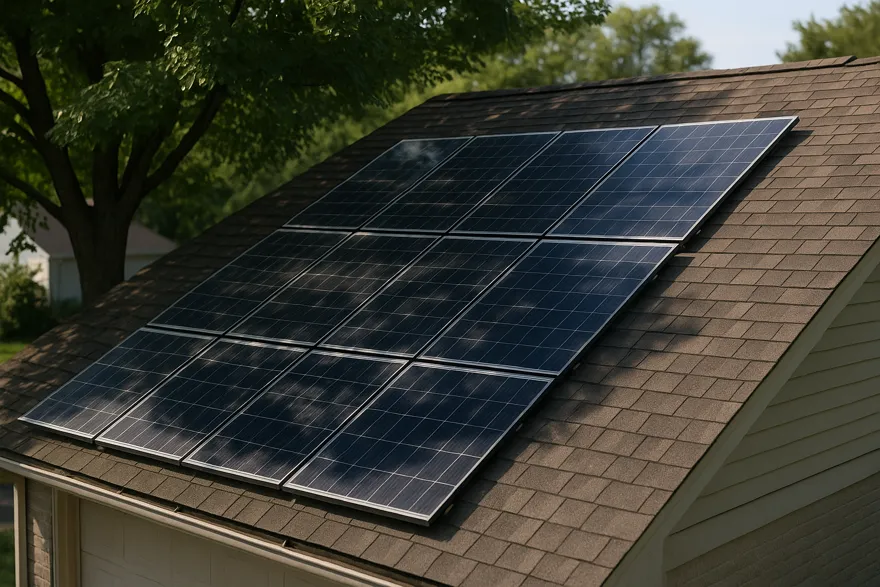
What this means for Taft roofs
The honest 2026 answer for Taft: solar pays back slower without the 30% credit - paybacks that ran 7-10 years often now run 10-14 - but electricity rates keep rising and hardware is the cheapest it has ever been. The deciding factor is California's export compensation, covered in the net metering section.
This guide is research, not advice: an independent summary of published prices and state rules. It is not an installer, lender or tax advisor - verify incentive eligibility with a licensed tax professional before relying on it.
Getting Taft quotes
The spread between the highest and lowest bid for the same roof routinely hits 30-50%, because solar quotes carry very different sales overheads. Two or three independent bids collected against the same system size is the single highest-value hour in the whole project.
This guide is research, not advice: an independent summary of published prices and state rules. It is not an installer, lender or tax advisor - verify incentive eligibility with a licensed tax professional before relying on it.
Common questions
How much does home solar cost in 2026?
The U.S. marketplace average is about $2.58 per watt installed - roughly $15,500 for a 6 kW system and $31,000 for 12 kW, before any state incentives. Quotes meaningfully above that level deserve a written explanation of what justifies the premium.
Is solar still worth it without the federal credit?
It depends mostly on your state's export rules and your daytime usage. Paybacks lengthened by roughly a third when the credit ended, but rising electricity rates and record-cheap hardware keep the math workable in states with decent export compensation - and marginal where exports pay avoided cost only.
Does solar raise my property taxes?
It depends on the state - many exempt solar's added home value from property tax, others do not, and some exemptions have expiration dates. This guide's state page lists the verified rule and source for your state.
Do I need a battery with my solar?
Not necessarily. Under full retail net metering, the grid effectively stores your surplus for free. Batteries earn their $12,000-16,000 price where export rates are low, outages are common, or time-of-use rates make evening self-consumption valuable.
How long do solar panels actually last?
Panels are typically warrantied for 25 years of production and commonly outlive it, losing about 0.5% output per year. Inverters are the component that usually needs replacement - typically once, around year 12-15, at a few thousand dollars.
Get solar quotes for Taft
These platforms collect bids from licensed installers so you can compare against the same spec. Prices come from installers, not from this site.
Disclosure: this is an independent guide. If you request quotes through a link here, the platform may pay this site a referral fee. That fee never changes your quotes.